
The Reach and Limits of Reform
Stranger in a Strange LandThis thread follows Smith’s hope that disciplined fellowship can heal human society, and his eventual recognition that no teaching can remove individual responsibility.
increasing Bearing strength in each event
 decreasing
Bearing strength in each eventdecreasingA Planet of Contradictions

Human Problems as Normality
A crowded, unequal world
The novel’s early survey presents political conflict, commercial noise, prejudice, and public spectacle as routine features of Earthly life.
A Martian observer’s shock
Smith has no inherited human explanations for these conditions. What people accept as normal often appears to him as an avoidable wrongness.
A Small Working Example

Fellowship in Practice
A disciplined group
The Nest demonstrates how trust, study, and mutual care can create a healthier community. Members share resources and relationships without requiring a centralized state.
Success on a limited scale
Their happiness provides evidence that some human arrangements can change. It does not prove that the whole planet will adopt the same discipline.
The Teacher’s Early Hope

A Better Way Offered
Teaching as reform
Smith uses a church’s public form to introduce Martian practice to Earth. He hopes that people who learn to understand one another can reduce violence, jealousy, and deprivation.
The difficulty of translation
The work requires more than hearing a message. Followers must learn a language and practise a discipline that cannot be conveyed fully through English sermons.
The Limits of Persuasion
Many Refuse the Work
Uneven results
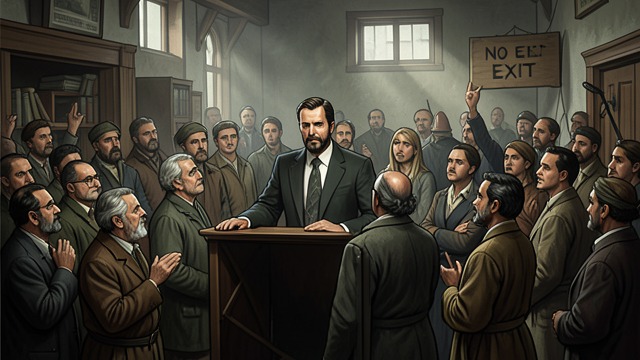
Smith sees that most people who encounter his teaching do not accept its demanding half. Some want comfort or miracles without the responsibility he associates with them.
Reform cannot be imposed
He recognizes that even a correct discipline cannot be made universal by force. Human beings must choose it, and that choice remains uncertain over generations.
The Test of Patience
Waiting Beyond One Life
Harshaw’s counsel
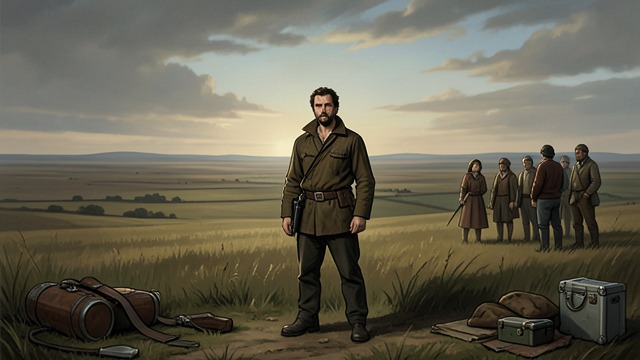
Harshaw reminds Smith that the Nest’s small success is evidence worth preserving, not proof that the human race is hopeless. He advises him to wait before judging the entire experiment.
An unfinished future
Smith accepts that the work may require centuries and repeated failures. The novel ends with teaching continuing rather than with society converted.
In the opening chapters on Earth
During the Church’s first year
During the expansion of the Church
Near the ending, after the Temple burns
During Smith’s last conversation with Harshaw
